How manual air pumps and tire inflator work

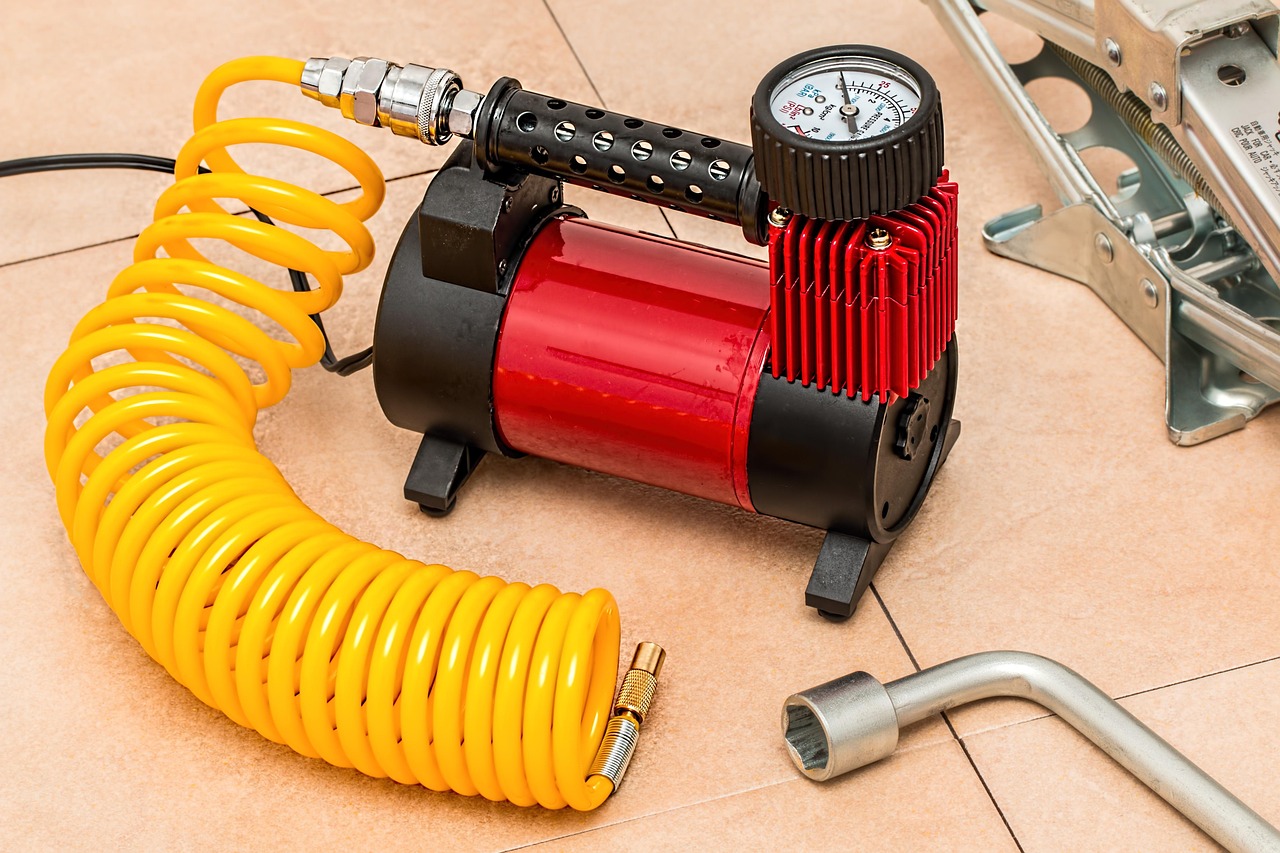
You may wonder how air pumps and a tire inflator keep you safe. Both use a piston that pushes air into your tire. This raises the pressure with each push or cycle. It is important to keep your tires filled. About 90% of tire blowouts happen from low air. When you use a hand pump, manual air pump, or electric inflator, you use tools that make this job simple. Look at the table below for the main types:
Type | Description |
|---|---|
Manual pumps | Cheap and light, but you need to pump by hand. |
Electric inflators | Fill tires fast, plug into your car, but can be hard to store. |
Battery-operated | Easy for drivers, best for people who want simple use. |
Key Takeaways
Check your tire pressure often to stay safe and help your car work better. When tires have the right air, they grip the road more.
Pick the best inflator for what you need. Manual pumps are easy to carry and good for emergencies. Electric inflators are faster and easier to use.
Take care of your inflator and pump by checking hoses and seals often. Good care makes sure they work well when you need them.
After you fill your tires, use a tire pressure gauge to check the air. This helps your tires last longer and saves gas.
Keep your inflator and pump in a cool, dry place so they do not get damaged. Storing them well keeps them ready and helps them last longer.
Air Pumps and Tire Inflator Basics
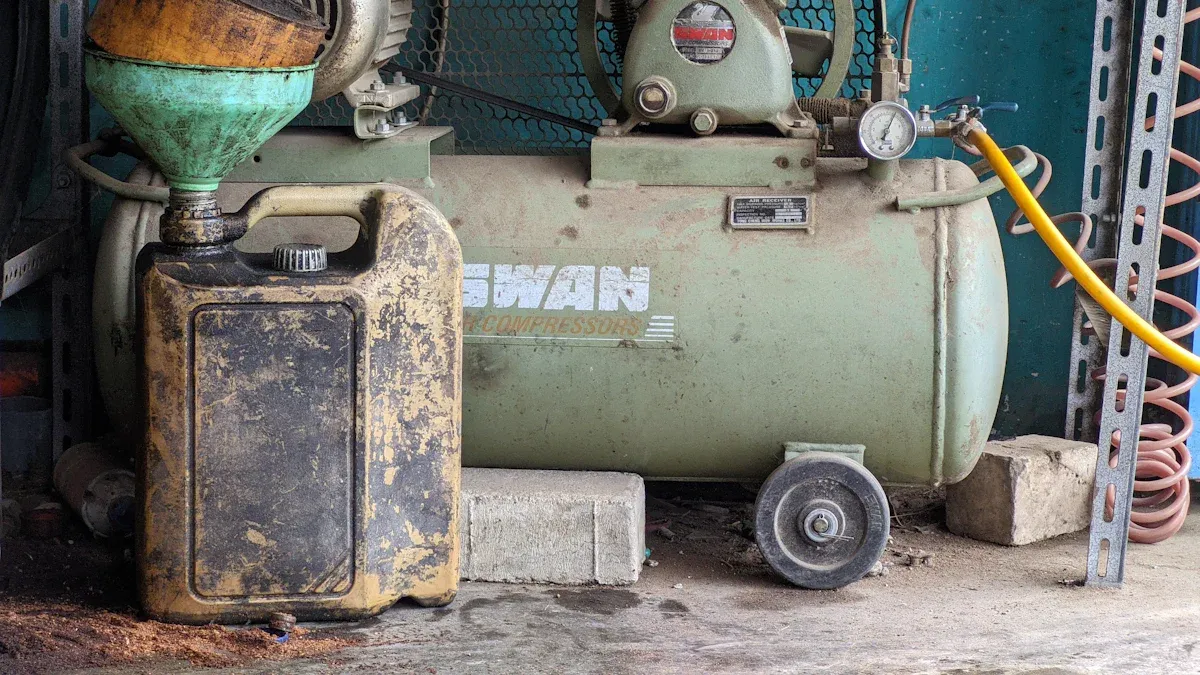
How Air Pumps Work
You might wonder what happens inside air pumps when you use them. The secret is the piston mechanism. When you push or pull the handle, the piston moves inside a cylinder. This action draws air in and then pushes it out into your tire. Here’s a simple breakdown of the process:
Step | Description |
|---|---|
Air enters the cylinder through an inlet valve. | |
Compression Stroke | The piston compresses the air, forcing it out through the outlet. |
Different types of air pumps use this basic idea. For example, a hand pump for your bike uses a piston and a one-way valve. This valve lets air in but stops it from coming back out. Some pumps, like diaphragm pumps, use a flexible membrane instead of a piston. Reciprocating pumps also use a piston to move air in and out.
Type of Pump | Mechanism Description |
|---|---|
Moves air by creating low pressure areas, allowing air to be drawn in and expelled. | |
Bicycle Pump | Utilizes a piston and one-way valve to create pressure, drawing air in when the piston is pulled up. |
Diaphragm Pump | Uses a springy diaphragm that compresses and decompresses to expel and refill air. |
Reciprocating Pump | Contains a piston that generates air flow by pulling air in through an inlet and expelling it through an outlet. |
Tip: Always check that your pump’s valves are working. If air leaks, you won’t get good tire inflation.
How Tire Inflator Works
A tire inflator works much like an air pump, but it’s designed for quick and easy tire inflation. You connect the inflator to your tire valve. When you turn it on or start pumping, it pushes air into the tire, raising the pressure. Most inflators have a built-in pressure gauge. This gauge helps you see the tire pressure as you work, so you don’t overinflate or underinflate.
Manual tire inflators use the same piston action as regular air pumps. Electric inflators use a motor to move the piston for you. Both types rely on check valves to keep air from escaping. You get a steady flow of air into your tire, and the pressure builds up until you reach the right level.
Note: Always use the pressure gauge on your inflator. Proper tire pressure keeps you safe and helps your tires last longer.
Manual vs Electric Inflators
You have two main choices for inflating your tires: manual hand pumps and electric tire inflators. Each has pros and cons.
Manual hand pump: You do all the work. Pumping by hand takes effort, especially for car tires. It can take several minutes of steady pumping to reach the right inflation. This method is great for emergencies or when you don’t have power.
Electric tire inflator: You plug it in and let it do the job. Electric inflators fill tires much faster. You don’t need to use much energy. They can inflate a flat tire in just a few minutes. These are perfect if you want convenience and speed.
Here’s a quick comparison:
Feature | Manual Hand Pump | Electric Tire Inflator |
|---|---|---|
Effort | High (physical work) | Low (just press a button) |
Speed | Slow | Fast |
Emergency Use | Always available | Needs power source |
Portability | Lightweight | Can be bulky |
Both types of inflator usually have check valves and pressure gauges. These features help you get the right inflation every time. If you want a workout and don’t mind spending time, a manual pump works fine. If you want quick results, go for an electric inflator.
Remember: Always keep your air pumps and tire inflator handy. You never know when you’ll need to fix a flat tire!
Benefits of Proper Tire Inflation
Safety and Performance
You might not think about your tire pressure every day, but it plays a huge role in keeping you safe. When your tires have the right pressure, they grip the road better and help your car stop quickly. If you drive with under-inflated tires, you risk longer stopping distances and poor handling. Over-inflated tires can also make your car harder to control because less tread touches the road.
Here’s what happens when tire pressure isn’t right:
Proper tire inflation gives you the best contact with the road, so your brakes work well and you stop faster.
Over-inflated tires have less tread touching the ground, which means you need more space to stop.
Under-inflated tires create extra friction, making it harder to stop, especially if you’re driving fast.
Less than half of drivers (42%) check their tire pressure regularly. If you’re one of them, you’re already ahead!
Check out these safety stats:
Evidence Type | Statistic | Impact |
|---|---|---|
Accidents due to tire failure | Many crashes could be avoided | |
Fatalities from underinflated tires | 247 out of 32,061 | Contributed to 0.8% of fatalities |
Injuries from underinflated tires | 23,100 out of 3 million | Contributed to 0.8% of injuries |
Annual deaths from blowouts | 41 | Directly linked to underinflation |
Fuel Efficiency
Keeping your tire pressure at the recommended level helps you save money on gas. When tires are under-inflated, your car uses more fuel to move because there’s more resistance. You might waste gallons of gas every week without even knowing it.
Proper tire inflation can boost your fuel economy by 2-3%.
If your tires are only at 75% of the recommended pressure, you lose up to 3% in fuel efficiency.
At 50% pressure, you could lose 10% at lower speeds and 5% at higher speeds.
Studies show you could save up to $432 a year just by keeping your tires filled.
Poor tire inflation wastes about 3.5 million gallons of fuel every day in the US. That’s a lot of money and energy!
Tire Longevity
If you want your tires to last, you need to keep them properly inflated. Under-inflated tires heat up more, which wears out the tread and weakens the tire’s structure. You’ll end up replacing tires more often, and that gets expensive.
Under-inflated tires wear out the edges faster than the center, so they don’t last as long.
You might need new tires twice as often if you drive with low pressure.
Tires that are 20% under-inflated can lose half their lifespan.
Tip: Check your tire pressure at least once a month. It’s quick, easy, and helps you avoid costly problems.
Using a Manual Tire Inflator and Hand Pump
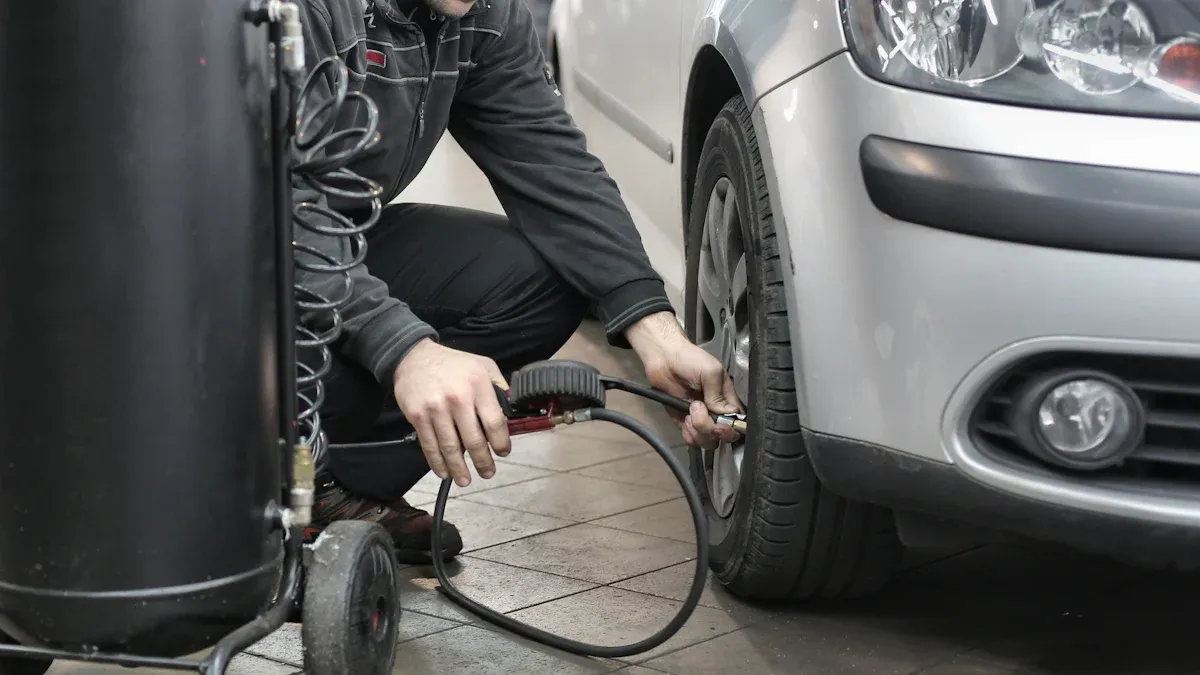
Preparation Steps
Getting ready to inflate a tire is easy if you follow a few simple steps. You want to make sure you have everything you need before you start. Here’s a quick checklist:
Gather your tools. You need a manual tire inflator or hand pump, a tire pressure gauge, and your vehicle owner’s manual.
Park your car on a flat surface. Turn off the engine and set the parking brake.
Avoid working in very hot or humid weather. This keeps you safe and helps your inflator work better.
You might also want to grab these items:
Tire gauge for checking pressure.
Air compressor or hand pump for inflation.
Inflation chuck to connect the pump to the tire valve.
Tip: Always read your owner’s manual for the recommended tire pressure. This helps you avoid over-inflation or under-inflation.
Connecting to Tire Valve
Now you’re ready to connect your pump or inflator to the tire. This step is important because a good connection means no air leaks. Here’s what you should do:
Connect the pump to the tire valve. Make sure it fits snugly.
Check for a tight seal. Air leaks can slow down inflation and waste your effort.
If your pump has a Presta valve, use an adapter for Schrader valves.
A secure connection makes every pump count.
Watch out for these common mistakes:
Not unscrewing the valve tip all the way. This can damage the valve stem.
Overtightening after inflation. Too much force can cause leaks.
Using the wrong pump head. This can block air flow or harm the valve.
Forgetting to press the valve core to release pressure first. Skipping this step can lead to leaks.
Ignoring dust caps. Dirt can clog the valve if you leave them off.
Note: Take your time with this step. A good connection means you get the most out of your manual tire inflator or hand pump.
Inflating the Tire
You’re ready to start pumping air into your tire. Using a manual hand pump or manual tire inflator takes a bit of effort, but you can do it. Here’s how:
Make sure your pump matches the tire valve.
Attach the pump securely to the valve stem.
Start pumping air into the tire. If your inflator has a gauge, watch the pressure as you go.
If there’s no gauge, stop every few pumps and check the tire pressure with your tire gauge.
Keep pumping until you reach the right pressure. Don’t over-inflate.
If you’re using manual hand pumps, you might need to pump for a few minutes, especially if your tire is flat. Take breaks if you get tired. You want steady, even strokes for the best results.
Callout: If you’re in an emergency and need to inflate a flat tire quickly, a manual tire inflator is always ready. You don’t need electricity or batteries.
Checking Pressure
Checking tire pressure is the last step. You want to make sure your tire is filled to the right level. Here are some ways to check:
Thumb check: Press your thumb on the tire. If it feels soft, you need more air.
Mass over wheels check: Look at the tire when your car is on the ground. If the tire looks squished, it’s probably low.
Trail comparison check: Drive on a flat surface with ink on the tire. If you see a streak, the pressure is low.
You can also use a tire pressure gauge for a more accurate reading:
Remove the tire valve cap.
Insert the gauge into the valve stem. You’ll hear a hissing sound.
When the hissing stops, read the pressure on the gauge.
Repeat for all your tires, including the spare.
Digital tire pressure gauges give you very precise readings. They often show decimal points, which helps if your vehicle needs a specific pressure. Handheld digital gauges are usually more accurate than built-in inflator gauges.
Tip: Always check your tire pressure after inflation. This helps your tires last longer and keeps you safe on the road.
Tire Inflator Safety and Maintenance
Common Mistakes
It is important to use your tire inflator safely. Many people make easy mistakes with pumps or inflators. These mistakes can cause problems or break your tools. Check this table to see what you should not do:
Mistake Description | Consequence |
|---|---|
Using incompatible or poorly calibrated pumps | Can lead to overinflation, underinflation, or valve damage, resulting in costly repairs. |
Panic-driven overinflation | Can cause dangerous blowouts due to rushed procedures and skipped safety checks. |
Rushing the connection or failing to achieve an airtight seal | Results in wasted time, false readings, and potential damage to valve stems. |
Setting tire pressure once and forgetting about it | Ignoring changing conditions can lead to improper tire shape and overheating. |
Neglecting air pump equipment | Leads to performance loss and reliability issues during emergencies. |
If you use a tire inflator the wrong way, you could get hurt. This is true for aerosol types too. Using metal tools near these inflators is risky. Sparks can light flammable sealants. This may cause fires or explosions. You could get burned or worse. Always read the safety rules. Take your time and do not rush.
Maintenance Tips
Taking care of your pump and inflator is important. You should look at hoses and seals every day. Check for cracks or leaks. Make sure all parts are tight and not worn out. If you have a battery inflator, charge it after you use it. Here are some simple tips:
Keep your pump in a cool, dry place.
Look at hoses and seals every day.
Check nozzles and connections for damage.
Charge battery inflators after using them.
Doing these things helps your inflator work well. It will be ready if you get a flat tire or have an emergency.
Component | Inspection Frequency |
|---|---|
Hoses | Daily |
Seals | Daily |
Tanks | Less often |
Valves | Less often |
Storing Equipment
Storing your tire inflator and pump the right way is smart. Clean your tools before you put them away. Dirt and water can cause rust or mold. Pick a cool, dry place away from the sun. Sunlight can crack hoses and make your inflator wear out faster. Put your pump on something soft so it does not get scratched. If you have a case, use it to keep your tools safe.
Tip: Do not wrap hoses too tightly or leave them in the sun. This can make them crack and get weak, so your pump may not work well.
Good storage keeps your tire inflator ready for the next time you need it. It also helps your tire care routine.
You can keep your tires in good shape with easy habits. Check your tire pressure often. Use a good gauge to get the best reading.
The right tire pressure makes your tires last longer. If tires are low on air, the edges wear out first. If tires have too much air, the middle wears out faster.
Check your tire pressure often for safety and better driving.
Keep the right tire pressure to save gas and help your tires last.
These tools can do many jobs.
They are important for regular checks and emergencies.
Choose the tool that works best for you. Stay safe and have fun on the road! 🚗
FAQ
How often should you check tire inflation?
You should check tire inflation at least once a month. If you drive long distances or notice changes in your ride, check more often. Proper pressure helps you stay safe and saves money.
Can you use a manual air pump for a bicycle and a car?
Yes, you can use a manual air pump for both a bicycle and a car. You need the right valve adapter for each. Pumping a car tire takes more effort and time than a bicycle tire.
What is a co2 tire inflator, and when should you use it?
A co2 tire inflator uses compressed gas to fill tires quickly. You can use it for emergencies or when you need fast inflation. Many cyclists carry one for quick fixes on the road.
Is an electric tire inflator better than a manual pump?
An electric tire inflator works faster and needs less effort. You just plug it in and press a button. Manual pumps are lighter and always ready, but they take more work.
What is the ultimate flat tire solution for emergencies?
The ultimate flat tire solution combines a portable inflator, a tire repair kit, and a pressure gauge. You can fix most flats and get back on the road quickly. Keep these tools in your car for peace of mind.
See Also
Understanding The Key Differences Between Tire Inflators And Air Pumps
What Sets Tire Inflators Apart From Air Pumps?
The Evolution Of Tire Inflators: From Manual To Smart Technology