OEM Tire Inflator Sourcing: Matching Motor and Cylinder Specs to Market Demand


You face a rapidly expanding OEM tire inflator market. The table below shows strong growth:
Metric | Value |
|---|---|
Market Size in 2026 | USD 1.5 Billion |
Forecast Period CAGR | 4.6% |
Projected Market Size in 2035 | USD 2.2 Billion |
Choosing the right motor and cylinder specs gives you practical benefits. You improve safety, boost efficiency, and gain a competitive edge. Automatic tire inflation systems meet regulatory demands and help vehicles perform better.
Governments encourage adoption of these systems.
Electronic control units monitor tire pressure and enhance reliability.
Key Takeaways
Align motor and cylinder specs with market needs to enhance safety and efficiency. This alignment boosts customer satisfaction and reduces warranty claims.
Evaluate suppliers carefully by assessing their manufacturing capabilities and quality control processes. Strong partnerships lead to reliable product delivery.
Stay updated on market trends and regulatory changes. Adapting to these shifts helps maintain competitiveness and meet consumer expectations.
Why Spec-Market Alignment Matters
Meeting Diverse Tire Needs
You face a market with a wide range of tire sizes and vehicle types. Passenger cars, SUVs, trucks, and specialty vehicles all require different inflation pressures and volumes. When you select the right motor and cylinder specs, you ensure your tire inflator meets these diverse needs. For example, a compact inflator with a high-efficiency motor can handle small car tires quickly. Larger cylinders deliver the airflow needed for truck tires. You must consider the end user's expectations for speed, portability, and reliability.
Tip: Analyze your target market segments. Match your inflator specs to the most common tire sizes and usage scenarios. This approach helps you deliver products that satisfy both consumer and commercial demands.
Risks of Poor Spec Selection
If you choose specs that do not align with market demand, you risk product failure and customer dissatisfaction. An underpowered motor may struggle with larger tires, causing slow inflation or overheating. Incorrect cylinder sizing can lead to inefficient performance or even safety hazards. You may also face increased warranty claims and negative reviews. These issues damage your brand reputation and reduce your competitive advantage.
Common risks include:
Reduced inflator lifespan
Poor user experience
Higher return rates
Missed regulatory standards
You protect your business when you prioritize spec-market alignment. This strategy supports long-term growth and customer loyalty.
Motor and Cylinder Specs
Motor Types and Performance
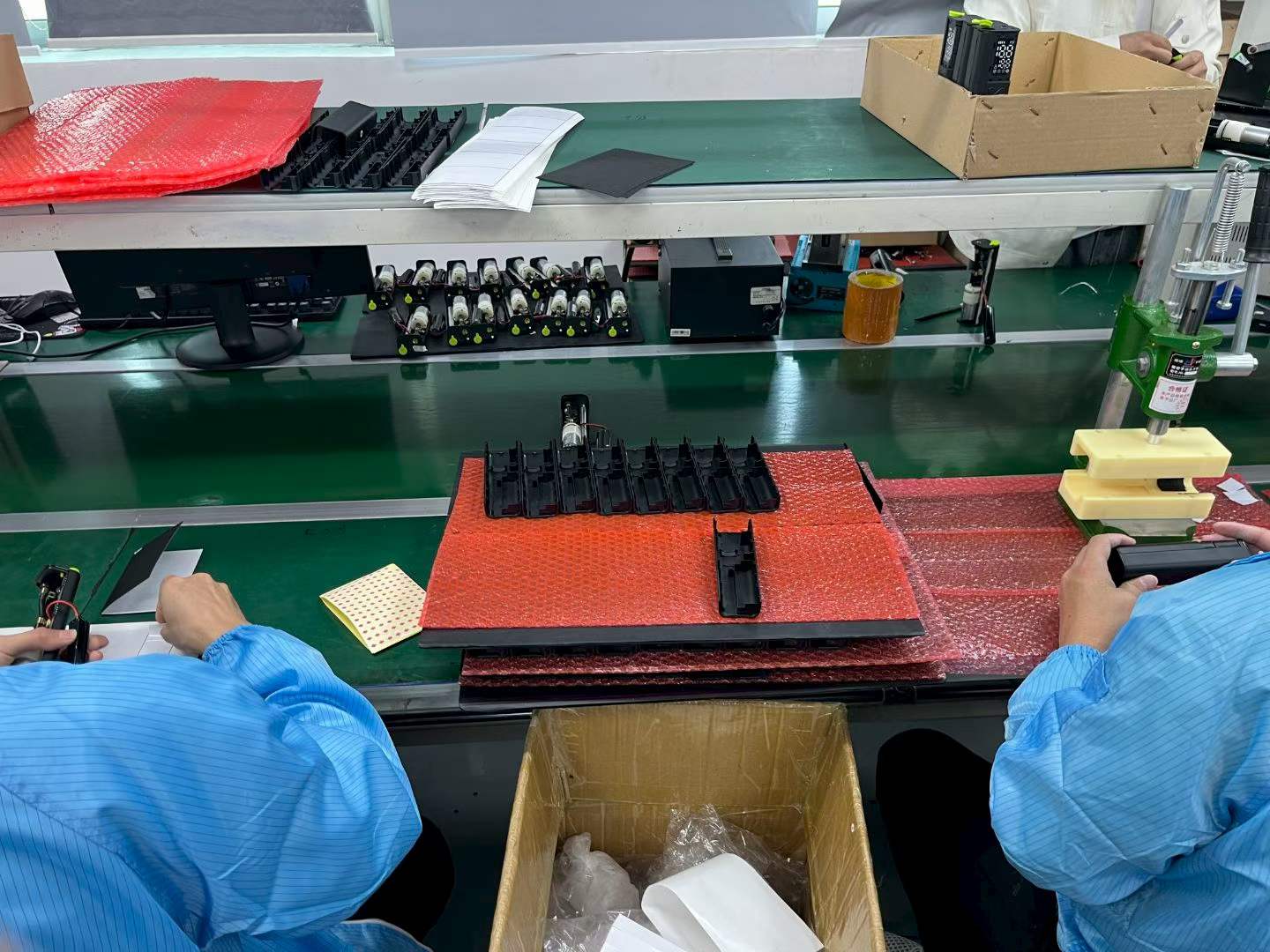
You must select the right motor for your OEM tire inflator to meet market expectations. The motor determines how quickly and efficiently the inflator works. Most consumer pumps use aluminum-wound motors, which offer basic performance and reliability. Advanced models, such as the KelyLands or Pro Series, use pure copper motors. These motors deliver faster inflation and higher pressure ratings. You can see the differences in the table below:
Performance Metric | Standard Consumer Pump | KelyLands / Pro Series |
|---|---|---|
Inflation Time (0-35 PSI) | 6–8 Minutes | 3–5 Minutes |
Max Pressure Rating | 100–120 PSI | 150 PSI |
Motor Internal Build | Aluminum-wound | Pure Copper |
Heat Management | Passive Ventilation | Active Cooling Fans |
A pure copper motor with active cooling fans provides better heat management. This feature allows for longer operation and reduces the risk of overheating. You improve user satisfaction and product reliability when you choose high-performance motors.
When you evaluate suppliers, you should consider key performance metrics such as review scores, response time, and on-time delivery. The chart below compares leading suppliers based on these factors:
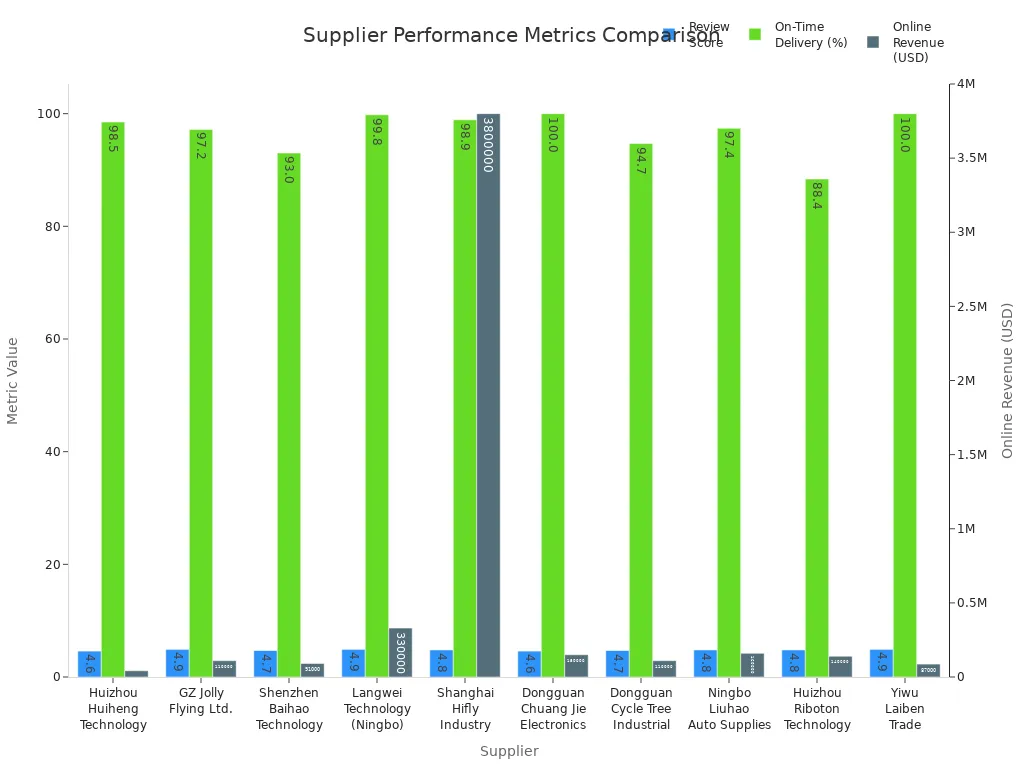
You gain a competitive advantage by partnering with suppliers who consistently deliver quality motors on time.
Cylinder Materials and Sizes
Cylinder material plays a critical role in the durability and weight of your tire inflator. You can choose between durable plastic and heavy-duty metal. Each material has its own advantages and disadvantages, as shown in the table below:
Material | Advantages | Disadvantages |
|---|---|---|
Durable Plastic | Lightweight, impact-resistant design | May not withstand extreme conditions as well as metal |
Heavy-Duty Metal | Long-lasting reliability, withstands rough handling | Heavier, may be more expensive than plastic |
If you want a lightweight and portable inflator, durable plastic is a good choice. For heavy-duty or commercial applications, metal cylinders offer better reliability and can handle rough conditions.
Cylinder size also affects inflation speed and compatibility with different tire types. Here are some important points to consider:
Larger cylinders can inflate bigger tires faster, which is important for trucks and agricultural equipment.
Smaller cylinders suit compact inflators for passenger cars and motorcycles.
The relationship between front and rear tire sizes matters for traction and transmission, especially in specialized vehicles.
The Rolling Circumference Index (RCI) helps you select compatible tire sizes and avoid performance issues.
You should match cylinder size and material to your target market’s needs for the best results.
Integration with Inflator Design
You must integrate the motor and cylinder specs with the overall inflator design to maximize reliability and user experience. The motor powers the inflator and sets the pace for inflation. The cylinder compresses air and ensures consistent performance. Additional features, such as automatic shut-off and digital gauges, enhance convenience and accuracy for users. The table below summarizes the main components and their functions:
Component | Function |
|---|---|
Motor | Powers the inflator, affecting performance such as inflation speed. |
Cylinder | Compresses air effectively, contributing to durability and functionality. |
Automatic Shut-off | Enhances user experience by providing convenience and accuracy. |
Digital Gauges | Allow users to maintain optimal tire pressure easily. |
You create a superior product when you align the motor, cylinder, and user interface features. This approach leads to higher customer satisfaction and fewer returns.
Market Trends Driving Demand

Growth in Portable Solutions
You see a surge in demand for portable tire inflators. The market for these devices reached USD 1.24 billion in 2024 and is projected to grow to USD 2.31 billion by 2033, with a CAGR of 7.1%. Consumers want multifunctional inflators that offer digital displays and automatic shut-off features. Manufacturers now focus on eco-friendly products and smart technology. You notice more DIY vehicle maintenance and a rise in electric vehicles, which require specialized inflation solutions. Portable inflators help you meet these new needs and stay competitive.
Increasing demand for portable and multifunctional inflators
Shift toward eco-friendly designs
Compliance with changing standards
Safety and Efficiency Focus
Safety and efficiency drive your sourcing decisions. Underinflated tires can reduce fuel efficiency by up to 3.3%. About 27% of vehicles in the U.S. have at least one underinflated tire, which increases the risk of blowouts and affects handling. NHTSA reports 41 deaths and over 1,000 injuries each year from blowouts. You respond by choosing inflators with advanced safety features and efficient Motor designs. In regions like Japan and Germany, high safety standards and consumer expectations push you to adopt digital inflators that improve vehicle performance and reliability.
Note: Low-rolling-resistance tires can boost fuel economy by 1-2% with a 10% reduction in rolling resistance.
Regulatory and Tech Shifts
You must adapt to evolving regulations and technology. Regional standards affect product specifications, documentation, and market entry. The table below highlights key regulatory bodies and their impact on your sourcing strategy:
Region | Regulatory Body | Focus Areas |
|---|---|---|
North America | NHTSA, EPA | Safety, emissions, efficiency |
Europe | UNECE, ECE R64 | Quality, environmental rules |
Asia | JASIC, CCC | Safety, documentation |
Shifting consumer expectations and tighter safety standards require you to innovate and digitize your product offerings. You align your sourcing and development strategies to meet these demands and maintain market access.
Sourcing Guide for OEMs
Supplier Evaluation Steps
You need a structured approach when evaluating suppliers for tire inflator components. Start by collaborating with your engineering teams early. This step ensures that technical requirements for both the motor and cylinder align with your product goals. Early involvement helps you avoid costly redesigns and delays.
Next, focus on the supplier’s ability to deliver consistent manufacturing at scale. Ask for samples and review their production processes. Reliable suppliers will show you their quality control systems and provide data from previous projects. You should also prioritize suppliers who understand real-world load cases and duty cycles. This knowledge helps them deliver components that perform well under actual operating conditions.
Consider these key steps as you evaluate suppliers:
Work closely with your engineering and quality assurance teams from the start.
Request detailed documentation on manufacturing processes and quality checks.
Visit supplier facilities to observe precision machining and rigorous testing.
Review the supplier’s track record for on-time delivery and responsiveness.
Assess their ability to reduce risks throughout the equipment lifecycle.
Ensure the supplier can scale production without sacrificing quality.
Tip: Avoid suppliers who cannot demonstrate expertise in precision machining or who lack robust testing protocols. These gaps often lead to low-quality products and higher failure rates.
Spec Selection Criteria
Selecting the right specifications for your tire inflator components requires careful analysis. Begin by ensuring that cylinder parameters, such as stroke and force, match your machine’s requirements. You must also consider environmental and operating demands. For example, inflators used in extreme temperatures or dusty environments need materials and designs that withstand these challenges.
Balance cost, quality, and lead time by using a clear set of criteria. The table below can help you compare potential suppliers:
Criteria | What to Look For | Why It Matters |
|---|---|---|
Cost | Competitive pricing, transparent quotes | Controls project budget |
Quality | Certifications, test reports, material traceability | Ensures product reliability |
Lead Time | Realistic delivery schedules, flexibility | Supports your production plans |
Technical Support | Responsive engineering teams, clear communication | Solves issues quickly |
Manufacturing Scale | Proven ability to ramp up production | Meets market demand |
You should also prioritize understanding how the motor and cylinder will perform together in your final product. Test prototypes under real operating conditions. This step helps you identify any issues before full-scale production.
Note: Always align your spec selection with your target market’s needs. A well-matched inflator delivers better performance, fewer returns, and higher customer satisfaction.
Spec Matching Challenges
Supply Chain Constraints
You face supply chain challenges when sourcing tire inflator components. Tariff volatility and geopolitical tensions often disrupt global trade. Many manufacturers now reconfigure their supply chains by nearshoring or reshoring production. This strategy helps you reduce import dependency and build supply resilience. Localizing production also allows you to respond faster to market changes. You must watch for protectionist policies that affect market pricing and competitiveness. Sustainability-linked trade regulations push you to adopt greener sourcing practices. These trends shape your sourcing strategy and impact your ability to deliver reliable products.
Nearshoring and reshoring reduce risks from tariffs and political instability.
Local production supports supply chain resilience.
Protectionist policies influence pricing and market access.
Green regulations encourage eco-friendly sourcing.
Tip: Build relationships with local suppliers to improve flexibility and reduce lead times.
Customization and Compliance
Customization and compliance requirements add complexity to your sourcing process. You must meet market-specific demands, which often means adapting designs for different regions. Regulatory frameworks can be strict, increasing compliance costs for new entrants. You need to balance these requirements with your production goals. Sustainability standards now play a bigger role in sourcing decisions. Companies that invest in eco-friendly inflator models gain an edge in markets with tough environmental rules. Smart factory initiatives and AI-driven automation help you customize products quickly and maintain high quality.
Aspect | Evidence |
|---|---|
Digital Transformation | Smart factory initiatives enhance manufacturing, enabling rapid customization and integration. |
Regulatory Compliance | Eco-friendly inflator models meet stricter environmental and safety standards. |
Supplier Capabilities | AI-driven automation improves supply chain efficiency and product quality, supporting regulatory compliance. |
Note: You improve market success when you align your sourcing strategy with customization and compliance needs.
Recommendations for OEMs
Best Practices for Spec Alignment
You can achieve effective spec alignment by following a series of proven steps. Start by exploring new materials that improve heat resistance and strength. This approach helps you meet the demands of modern tire inflators. Develop prototypes and test them in real-world conditions. Testing allows you to identify weaknesses before mass production. Involve engineers and material scientists in the redesign process. Their expertise leads to better insights and stronger products. Update user manuals to reflect new designs and maintenance protocols. Clear documentation supports end users and service teams. Train service engineers on the latest designs. Well-trained staff can handle new components with confidence. Implement rigorous quality control checks for redesigned parts. These checks ensure reliability and safety. Establish a feedback loop to gather user input for ongoing improvements. User feedback drives innovation and helps you stay ahead of market trends. Keep comprehensive records of every redesign step. Good documentation supports future upgrades and regulatory compliance.
Tip: Regularly review your spec alignment process to adapt quickly to changing market needs.
Explore advanced materials.
Prototype and test thoroughly.
Collaborate with technical experts.
Update manuals and protocols.
Train service engineers.
Apply strict quality control.
Gather user feedback.
Document every step.
Building Supplier Partnerships
You strengthen your sourcing outcomes by building strong relationships with suppliers. Enhance communication and ensure both sides understand product plans. Trust grows through effective collaboration, especially when you face challenges like the shift to electric vehicle technologies. Use findings from industry studies to improve supplier performance metrics. Strong internal relations among your purchasing, engineering, and manufacturing teams lead to faster product development. When you align your goals with suppliers, you create a foundation for long-term success.
Foster open communication with suppliers.
Collaborate to solve challenges together.
Use industry benchmarks to guide supplier performance.
Build strong internal teamwork for efficient development.
Note: Lasting partnerships with suppliers help you respond quickly to market changes and maintain high product quality.
You drive success by matching motor and cylinder specs to market needs. Focus on these essentials:
Understand performance requirements for efficiency.
Select durable materials for longevity.
Avoid installation pitfalls to prevent issues.
Prioritize secure provisioning, clear acceptance criteria, and strong partner networks. Stay proactive to lead in tire inflator sourcing.
FAQ
What motor type should you choose for high-demand tire inflators?
Motor Type | Best Use Case |
|---|---|
Pure Copper | Heavy-duty, fast jobs |
Aluminum | Standard, light use |
Choose pure copper motors for faster inflation and better durability.
How do cylinder materials affect inflator performance?
Metal cylinders withstand rough handling and extreme conditions. Plastic cylinders offer lightweight portability. Select the material based on your target market’s needs and expected usage.
Can you customize specs for different regions?
You can customize motor and cylinder specs to meet local regulations and user preferences. Work with suppliers who support design flexibility and compliance.
See Also
Tailored Tire Inflators for Automotive Distributors: OEM and ODM Options
Comprehensive Guide to Motor and Cylinder Tech in Tire Inflators
Impact of Motor and Cylinder Design on Tire Inflator Output
Motor Power and Cylinder Design: Key Factors in Inflator Performance
Choosing Between Factories and Exporters for Tire Inflators and Accessories