Tire and Tyre What Makes Them Different

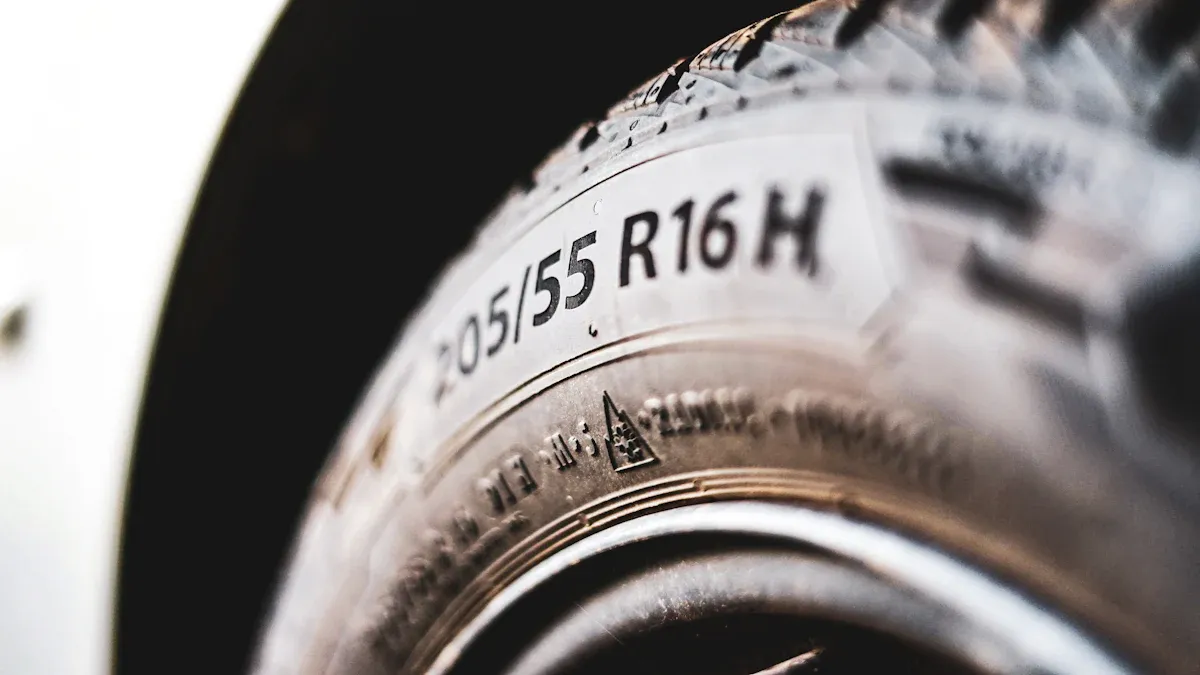
You may see people use tire and tyre for the same thing. It is a rubber cover on a wheel. Tire is used in American English. Tyre is used in British English and in Commonwealth countries. You can find this difference in big dictionaries:
Term | Definition | Pronunciation |
|---|---|---|
Tire | Rubber cover, usually filled with air, on a car wheel. | /ˈtaɪər/ |
Tyre | British spelling for a rubber wheel cover, usually with air. | /ˈtaɪə/ |
Both words talk about the same thing. The spelling is different based on where you live.
Key Takeaways
Tire and tyre mean the same rubber part on a wheel. The only difference is how you spell the word. 'Tire' is used in American English. 'Tyre' is used in British English.
Use 'tire' if you write for Americans. Use 'tyre' if you write for British or Commonwealth people. This stops people from getting confused.
Both words talk about the same thing and job. They help cars grip the road. They protect the wheels. They help cars move safely.
Spelling can change how you shop. Always look at the spelling to buy the right thing.
Knowing the spelling helps you talk clearly. Use the right word for your readers. This helps everyone understand better.
Tire and Tyre Spelling
American English Tire
You see the word tire a lot in America. People in the United States say tire for the rubber part on a wheel. Tire is used in car books, ads, and news stories. Only tire is correct in American English. If you write tyre in America, people might get confused.
USTMA members work hard to make tires safe and strong.
Tire is also used for more than one. For example, you say, "I need new tires for my car." In Canada, tire is used too, especially in official papers and labels.
The word 'tire' is normal in American English. 'Tyre' is used in British English. 'Tyre' is not used in America.
'Tyre' is not accepted by top English experts and is not used in America.
You see tire in American science papers and rules.
This study helped researchers and leaders find important topics about tire particles and their chemicals.
British English Tyre
You see tyre in British English and in many Commonwealth places. People in the UK, Australia, and New Zealand say tyre for the same wheel cover. Tyre is found in car books, ads, and racing news.
'My car needs a new tyre before I can drive.'
'The tyre company sells many sizes and styles.'
'In London, I saw a shop with a tyre sale.'
'British race cars use high-performance tyres.'
The plural is tyres. For example, you read, "The mechanic checked all four tyres for damage." In Australia and Canada, tyre is used in some books, especially those with British rules.
We show how a science group on chemicals and pollution can help with tire research and rules around the world.
Now you know tire in American English and tyre in British English mean the same thing. The spelling depends on where you live or who you write for.
Difference Between Tyre and Tire
Meaning
You might wonder what does tire mean and what does tyre mean. Both words describe the same thing. They refer to the rubber ring that fits around a wheel on a car, bike, or truck. You see this part every day on vehicles. The only real difference between tyre and tire is the way people spell the word in different countries.
Dictionaries agree that tire and tyre both mean a rubber ring on a vehicle's wheel. The spelling depends on where you live.
You can check major dictionaries for more details:
Tire: In American English, this word means a ring of rubber placed over the rim of a wheel to help vehicles move and grip the road.
Tyre: In British English, this word has the same meaning as tire. It is just the British spelling.
Tire (verb): This word can also mean to become tired or weary, but that is not related to cars.
Tyre (noun): This always means the rubber ring for vehicles in British English.
When you look for the difference between tyre and tire, you find that both words describe the same object. You do not need to worry about using the wrong word if you match the spelling to your country.
Function
You use a tire or a tyre to help a vehicle move safely and smoothly. The main job of this part is to give the wheel grip and protect it from damage. You see tires on cars, trucks, bikes, and even airplanes. Tyres do the same thing in the UK and other places.
Tires and tyres both provide traction so vehicles do not slip.
They cushion the ride and make travel more comfortable.
They protect the wheel from bumps and sharp objects.
You will not find any difference in how a tire or a tyre works. The function stays the same no matter which spelling you use. When you ask what does tire mean or what does tyre mean, you get the same answer. The tire and tyre both keep you safe on the road.
You can trust that tire and tyre mean the same thing and do the same job. The only thing that changes is the spelling.
Tire and Tyre Origins
Historical Background
You might ask where tire and tyre come from. Both words have a long story with wheels. Long ago, people used metal bands to cover wooden wheels. These bands protected the wheels. The word "tire" showed up in English in the 1400s. It meant an iron or steel band that held the wheel together. As time passed, the meaning changed when technology got better.
When inventors made the first rubber wheel covering, Americans kept using "tire." In Britain, people started spelling it "tyre" in the early 1800s. This change happened when rubber wheel coverings became common on bikes and cars. The spelling "tyre" is actually older. It changed to "tire" in the 1600s and 1700s. But "tyre" came back and became normal in Great Britain in the 1800s.
The word "tyre" comes from the French word "tirer," which means "to pull."
British writers added a "y" to make the word easier to read.
The American spelling "tire" became popular because Noah Webster wanted simple words.
Evolution of Spelling
You can see a clear difference in how people use tire and tyre now. The table below shows how the spelling changed in different places:
Spelling | Region | Historical Context |
|---|---|---|
Tire | American English | Stayed standard in America, matching old meanings from the 1400s. |
Tyre | British English | Became the main spelling in Britain, especially for air-filled tires. |
The split became clear in the 1800s when rubber tires got popular. |
As cars and bikes became more common, people needed strong rubber wheel coverings. Tire and tyre both mean the same thing. The spelling depends on where you live. Today, tire is only used in America. Tyre is the main spelling in Britain and many Commonwealth countries.
Practical Implications
Product Choice
You may wonder if spelling changes what you buy. Most of the time, you will not have trouble shopping for tires or tyres. Stores in America use tire. Shops in the UK and Australia use tyre. Both words mean the same thing.
Sometimes, spelling can make things confusing. Names that look or sound alike might trick buyers. For example:
If two names sound the same, you may think they are the same.
If two names look alike, you might pick the wrong one.
If two names seem to match, you may believe they are equal, even if they are not.
Trademark rules show that small spelling changes can confuse people. A brand called "Addydas" could be mixed up with "Adidas" because they sound similar. This mix-up can happen when you shop online.
Here is a table with cases where spelling or naming caused confusion:
Case Name | Description |
|---|---|
Nespresso USA, Inc v. Africa America Coffee Trading Co. | Using 'Nespresso compatible' for coffee pods made people confused because the names were close. |
Weight Watchers Int’l, Inc. v. Stouffer Corp. | Stouffer's Lean Cuisine ads confused buyers by using the Weight Watchers name, even with warnings. |
You should look at the spelling and brand name before buying. This helps you avoid mistakes and get the right thing.
Global Usage
People use tire and tyre all over the world. In America, tire is in car books, ads, and papers. In the UK, Australia, and other Commonwealth places, tyre is the normal spelling. If you write for people everywhere, pick the spelling your readers use.
Tip: Use tire for American readers and tyre for British or Commonwealth readers. This helps your writing stay clear and easy to read.
Writers and companies change their spelling for different markets. Big brands use both spellings on their sites and packages. This helps them reach more customers.
When you travel or shop online, you will see both tire and tyre. You do not need to worry about how they work. The products are the same, no matter the spelling.
Common Questions
Which Spelling to Use?
You may wonder which word you should use in your writing or when talking about cars. The answer depends on where you live or who will read your words. If you write for people in the United States, you should use "tire." People in the UK, Australia, and other Commonwealth countries expect to see "tyre." You can remember this rule by thinking about the country or audience first.
Tip: Always match your spelling to your reader's location. This helps everyone understand you better.
If you ask yourself when to use tire, choose it for American English. When to use tyre comes up if you write for British or Commonwealth readers. Many companies change their spelling on websites and packaging to fit the market. This small change makes your message clear and professional.
Technical Differences
You might think tire and tyre mean different things in engineering or science. In reality, both words describe the same product. No technical standard separates them. Engineers and car makers use both words for the same types of products.
You will find different types of tires or tyres, but the spelling does not change how they work. Here is a table that shows two common types:
Tire Type | Description |
|---|---|
Radial Tire | A pneumatic tire where the carcass ply cords are arranged at an angle of 90° or close to it. |
Bias Tire | A pneumatic tire where the cords intersect at an angle of less than 90° to the center line. |
Both radial and bias tires (or tyres) appear in cars, trucks, and bikes around the world. The spelling does not affect the design, safety, or performance. You can trust that no technical difference exists between tire and tyre. The only thing that changes is the way you spell the word.
You have learned tire and tyre are spelled differently. Both words mean the same thing. Experts say tire and tyre are the same object. People use each spelling in different places. There is no difference in what they mean or do. If you use the wrong spelling, people might get confused. This is important at work or in school. Always use the spelling your readers expect. The story of tire and tyre shows how English changes. Knowing this helps you talk and write clearly.
Tip: Pick the spelling your reader uses so they understand you.
FAQ
What is the main difference between tire and tyre?
You will find that "tire" and "tyre" mean the same thing. The only difference is the spelling. Americans use "tire." People in the UK and Commonwealth countries use "tyre."
Can you use tire and tyre in the same sentence?
You should not use both spellings in the same sentence. Pick one spelling based on your audience. This keeps your writing clear and professional.
Does using the wrong spelling cause problems?
Using the wrong spelling may confuse your readers. If you write for Americans, use "tire." If you write for British readers, use "tyre." Matching your spelling to your audience helps everyone understand you.
Are there any other words like tire and tyre?
Yes! Many English words have different spellings in American and British English. For example:
American English | British English |
|---|---|
color | colour |
center | centre |
organize | organise |
Do tire and tyre have different pronunciations?
You will hear both words pronounced the same way. The spelling changes, but the sound stays the same. You can say either /ˈtaɪər/ or /ˈtaɪə/ depending on your accent.
See Also
Do All Tire Inflators Appear Identical?
How Do Tire Inflators Differ From Air Pumps?
Understanding The Key Differences Between Tire Inflators And Air Pumps
Minimizing Downtime: Tire Inflators' Importance For Fleet Care
Exploring The Evolution Of Tire Inflators: From Manual To Smart