Tracing the Journey of the Tire Inflator from Hand Pumps to Smart Devices

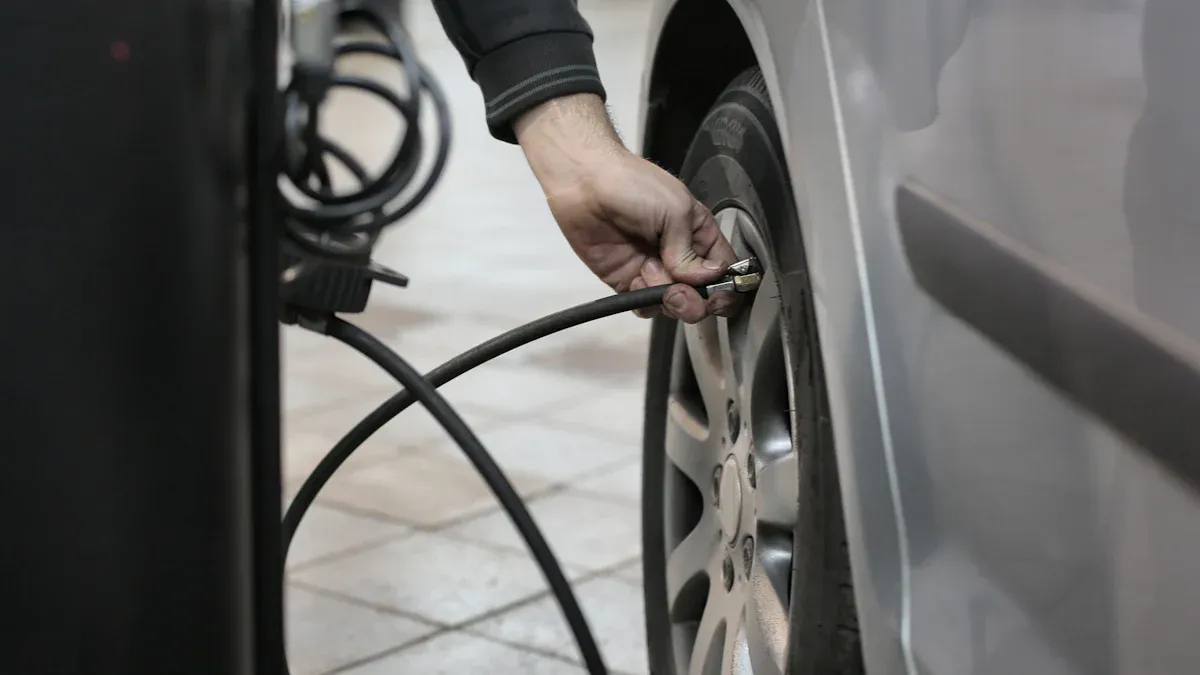
Imagine a driver stuck on a quiet road. The driver grabs a small device. This device quickly fixes the tire pressure. Tire inflator technology has changed a lot over time. It started with simple air pumps. Now, there are smart devices. These make taking care of tires easier and safer. Studies show automatic inflators help stop accidents. Digital pressure gauges also make roads safer. More people are buying these devices. New features and more cars help the market grow.

Key Takeaways
Tire inflators changed from old air pumps to smart devices. These new devices help people take care of tires more easily and safely. Hand pumps were the first tools people used to fill tires. Now, electric and cordless inflators save time and need less work. Digital and smart inflators show the exact pressure. They turn off by themselves and can connect to apps for better tire safety. Picking the right inflator depends on your vehicle and how you use it. You should also think about features like how easy it is to carry, auto shut-off, and pressure accuracy. Checking and keeping the right tire pressure with a good inflator makes you safer. It also saves gas and helps your tires last longer.
Origins
Ancient Air Pumps
The story of the tire inflator starts with old air pumps. People in Mesopotamia and Egypt used bellows about 3000 BCE. Bellows were made from animal skins or leather. They helped blow air into fires. Bellows had two nozzles. One nozzle took in air. The other nozzle pushed air out. This simple tool taught people how to move air. In the 3rd century BCE, Greek engineers like Ctesibius made force pumps. These pumps used air pressure to move water. We have not found any old pumps from that time. But old books talk about how they worked. Greek inventors also made things like belts, pipes, and gears. These parts helped them try new ideas with pumps. Some experts think lost books may tell about even better devices. The first tire inflators came from these early inventions. They helped make new inflator technology possible.
Note: Ancient air pumps did not fill tires, but they showed how moving air works. This idea became important for tire inflators later.
Early Hand Devices
Early hand pumps were a big step for tire inflators. People used their own strength to move air. Most hand pumps had a piston or plunger inside. The piston moved up and down in a tube. This made suction and pressure. Strong materials like steel and leather made pumps last longer. Designers put in check valves to guide the air. Early hand pumps had small pistons. This meant each push moved less air. People needed to be strong and patient to fill tires. Some pumps made people jump on the handle. This was called "rapping." It was slow and made people tired. Over time, inventors made pumps better. They added longer strokes and stronger seals. When the pneumatic tire was invented in the 1800s, more people needed tire inflators. Hand pumps became important for bikes and cars. These tools helped people take care of their tires. They led to the modern inflators we use today.
Early hand devices were not the same as old air pumps:
Small pistons made them work slower.
One-stage pumps needed more strength.
Leather seals had to be fixed often.
How well they worked depended on piston size and stroke.
The change from old air pumps to hand pumps shows how inflators got better. Each new idea made tire care safer and easier.
Tire Inflator History and Evolution
Pneumatic Tire Invention
The story of the tire inflator changed when the pneumatic tire was invented. Inventors wanted to make tires filled with air work well. In 1845, Robert William Thomson made the first inflatable tire. He named it the “aerial wheel.” It used rubber and leather. People did not use it much. It was hard to make and cost a lot. In 1887, John Boyd Dunlop wanted his son’s tricycle to be more comfortable. Dunlop made a new tire with an air-filled tube. He wrapped it in rubber and canvas. He added valves to keep air inside. Dunlop got a patent in 1888. Soon, racers started winning with these tires. People saw how much better they were.
The pneumatic tire changed many things. People needed tools to fill and check tire air. Tire inflators became important. The new tires made rides smoother and safer. More people used bikes and cars. More people wanted inflators. Tire inflators changed as vehicles changed.
The pneumatic tire’s success led to the modern tire inflator. Without air-filled tires, inflators would not exist.
Key milestones in the evolution of the pneumatic tire and inflator:
1845: Thomson’s first inflatable tire patent.
1887-1888: Dunlop’s practical pneumatic tire and patent.
Early 1900s: Cars with demountable rims made tire changes easier.
1930s: Synthetic rubber improved tire durability.
Mid-20th century: Radial tires made rides smoother and longer-lasting.
The need for tire inflators grew as air-filled tires became common.
Hand Pumps Era
The hand pumps era was a big change for tire inflators. Before tire inflators, people used water and vacuum pumps. These pumps moved air or liquid with a piston or plunger. When pneumatic tires became popular, inventors changed these pumps to fill tires.
Single-stage hand pumps were the most common. They pushed air down and pulled air up. People could reach high pressures, sometimes up to 800 psi. This depended on piston size and strength. Old pumps used horn and leather for seals. These seals limited pressure but lasted longer. The pump’s stroke length changed how much air moved each time.
Manual water hand pumps had simple designs.
Tire hand pumps needed strong seals and valves.
People used their own strength for high pressure.
Pumps worked for small jobs but took effort and time.
Bikes and cars made hand tire inflators very important. More people rode bikes for fun and health. Cities grew, and cars became common. People wanted portable inflators for safety. Bike rental companies needed easy inflators for their bikes. As safety became important, more people bought inflators to keep tires in good shape.
Hand pumps helped people care for their tires. They made travel safer and more reliable.
Engine-Driven Inflators
Tire inflators kept changing with engine-driven inflators. As cars and trucks became common, people wanted faster ways to fill tires. In the 1930s, screw compressors were invented. These let engines power inflators. Portable electric inflators soon replaced many hand pumps. People could plug them into a car’s outlet or wall socket.
Engine-driven inflators had new features. Built-in gauges let people check tire pressure. Automatic shut-off stopped the inflator at the right pressure. Digital displays made numbers easy to read. Cordless inflators with batteries gave true portability. These inflators worked quietly and safely, even with the car off.
Screw compressors made engine-driven inflators possible.
Electric inflators replaced manual pumps for many people.
New features made inflators safer and easier.
Cordless inflators gave freedom and convenience.
The history and evolution of the tire inflator show how new inventions made tire care better. From hand pumps to engine-driven inflators, people found better ways to keep tires safe and ready for travel.
Modern Tire Inflation Technology
Electric and Digital Inflators
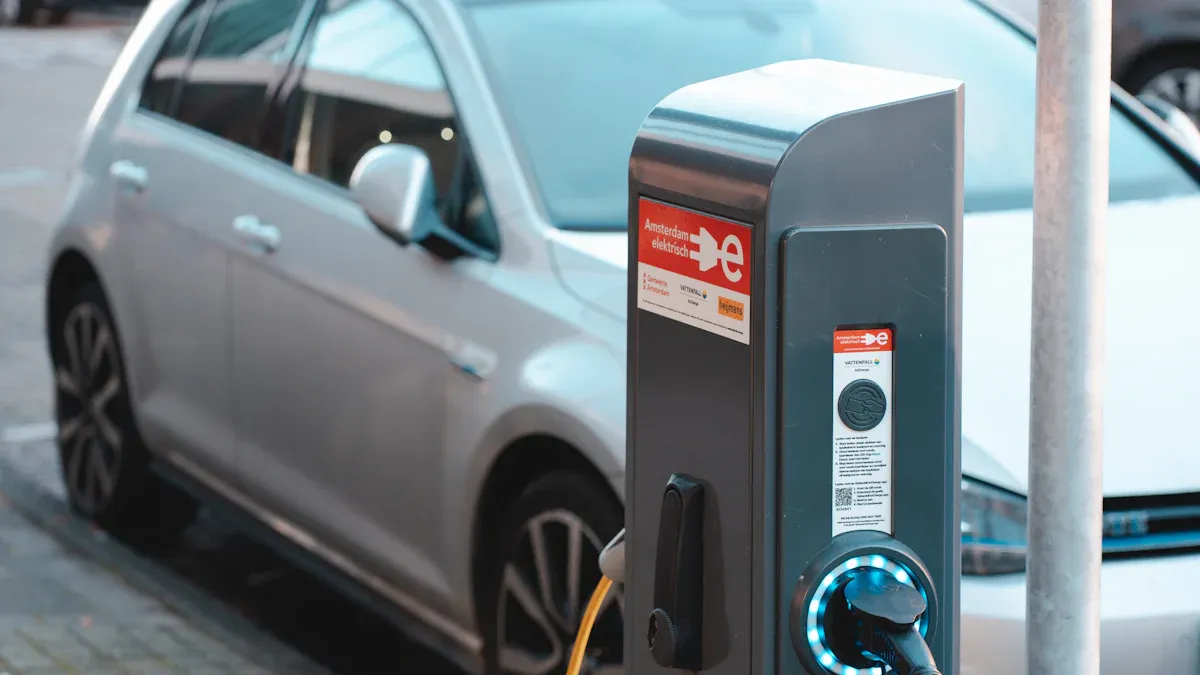
Electric inflators have made tire inflation much easier. These devices use strong motors and digital parts. They fill tires quickly and show exact numbers. Some can fill a car tire in just a few minutes. Bigger inflators work for SUVs and trucks too. This helps a lot during emergencies. Digital inflators can fill or let out air by themselves. They keep the pressure close to what you set. Big LCD screens show the numbers clearly. Sensors help switch between PSI and BAR units. You can plug these inflators into a car or home outlet. They work for pressures from 4 to 145 PSI. They are very accurate, with less than 1% error. These features make them good for cars, motorcycles, buses, and trailers.
Feature Category | Details |
|---|---|
Digital Technology | Automatic inflation and deflation to within 0.5 PSI of desired pressure |
Design | Sleek, streamlined with large illuminated LCD display |
Compatibility | Works with both air and nitrogen |
Pressure Units | Precision sensors with PSI/BAR conversion |
Usage | Suitable for cars, motorcycles, buses, trucks, trailers |
Voltage | 110V |
Pressure Range | 4 – 145 PSI |
Air Flow | 2.5 – 3.4 CFM |
Max Pressure Output | 145 PSI |
Accuracy | Less than 1% full scale |
Operating Temperature | 14 – 122˚ F |
Portable and Cordless Devices
Portable tire inflators are popular because they are easy to use. Cordless inflators have strong batteries, usually 4000mAh to 6000mAh. You can use them anywhere, even without a plug. Many have digital gauges and turn off by themselves. This makes them safe and simple to use. They are small and light, so you can keep them in your car or bag. Some have extra features like lights or power banks. Well-known models like the Skylla TJA1 and Milwaukee M12 work fast and store parts inside. These inflators can fill car tires, bike tires, and even pool toys.
Tip: Cordless inflators with smart features can help you check tire pressure and get alerts on your phone.
Smart Features
Smart tire inflators use new technology to make things safer and easier. Many have digital screens and turn off when done. Some are water-resistant and have bumpers to protect them. You can control some inflators with WiFi or Bluetooth. This makes filling tires simple. There are preset modes for different tires, LED screens, and rechargeable batteries. Some have voice control and touch buttons for better use. High-tech sensors help them be more exact. You can connect them to apps or your car to watch tire pressure in real time. These smart features help keep tires safe and lower the chance of accidents.
Comparing Tire Inflators
Manual vs. Electric
Manual and electric tire inflators are not the same. Manual inflators do not need electricity or batteries. You can use them anywhere, even if there is no power. They are light and easy to carry or store. But you must use your own strength to pump air. It takes more time to fill a tire with a manual inflator. Electric inflators have motors that do the work for you. They fill tires much faster and are easier to use. Cordless electric inflators can go anywhere and have special features. Some have pressure gauges and turn off by themselves. Electric inflators save time and are very handy. Manual inflators cost less and work well without power.
Aspect | Electric Inflators | Manual Inflators |
|---|---|---|
Preferred Regions | North America, Europe | Emerging markets, less affluent regions |
Key User Demographics | Younger, tech-savvy consumers; athletes; professionals | Budget-conscious consumers; traditional users |
Driving Factors | Convenience, speed, technology, e-commerce | Affordability, simplicity |
Market Channels | Online sales | Traditional retail |
Market Size & Growth | Large and growing | Smaller niche market |
Regional Economic Influence | High disposable incomes | Lower disposable incomes |
Product Features | Advanced battery tech, pressure regulation | Basic, no power source needed |
Pros and Cons
Manual tire inflators are cheap and simple to fix. They do not need batteries or plugs. People say they last long and are quiet. But you have to work harder and wait longer to fill a tire. Electric inflators are quick and easy to use. Many are small and have extra things like lights or screens. Some electric inflators are loud and cost more money. They need to be charged or plugged in. Over time, electric inflators might need more repairs.
Aspect | Manual Tire Inflators | Electric Tire Inflators |
|---|---|---|
Cost | More affordable | More expensive |
Portability | Highly portable | Less portable (corded); cordless are portable |
Physical Effort | Requires effort | Minimal effort |
Inflation Speed | Slower | Faster |
Power Source | None needed | Needs outlet or battery |
Durability | More durable | May be less durable |
Convenience | Less convenient | More convenient |
Noise Level | Quieter | Can be louder |
Choosing the Best Option
People should think about a few things before buying a tire inflator. First, think about how often you will use it and what kind of vehicle you have. Strong materials help the inflator last longer. Small inflators are easy to carry and store. Big screens and simple buttons make them easy to use. The price should match what the inflator can do. Good inflators save money over time. Reading reviews helps you pick a good brand. Extra things like digital gauges, lights, and auto shut-off are helpful.
Pick an inflator that fits your tire and vehicle.
Choose a design that matches your tire size and needs.
Make sure the inflator fits your tire’s diameter.
Look for features like lights and auto shut-off.
Buy from brands people trust.
Use double cylinder inflators for big pickup tires.
Small inflators are good for little tires.
Check if the inflator works with your valve and has quality checks.
Tip: People who travel a lot or drive big cars may like electric inflators with fast filling and extra features. People who want something simple and cheap may like manual inflators.
Tire inflators started as hand pumps. Now, they are smart and cordless. Today’s inflators have digital screens. They can turn off by themselves. You can use different power sources. These new inflators help keep roads safer. They also help save fuel and make tires last longer.
Modern inflators work for cars, bikes, and sports gear.
Bluetooth and app controls help you take care of tires easily.
Experts think future inflators will use AI and be better for the environment. Will smart technology make tire safety easier for everyone?
FAQ
What is a tire inflator?
A tire inflator is a tool that puts air in tires. It keeps tires at the right pressure. People use it for cars, bikes, and sports gear.
How often should someone check tire pressure?
Experts say to check tire pressure every month. Drivers should also check before long trips. The right pressure helps tires last longer and keeps you safe.
Can a portable tire inflator fill all types of tires?
Most portable inflators work for car, bike, and motorcycle tires. Some can fill truck or SUV tires too. Always look at the inflator’s details before using it.
Why do modern inflators have digital displays?
Digital displays show the exact pressure number. They help people not put in too much or too little air. Clear screens make filling tires easier and safer.
What features make a tire inflator easy to use?
Good features are automatic shut-off, built-in lights, and cordless use. Big buttons and clear screens help too. These features save time and help stop mistakes.