Quality, Price, and Performance: Balancing Factors When Buying Tire Inflators in Bulk


When you buy many tire inflators at once, you want the best deal for your business. If you only think about price or quality, it can cause problems. You could get bad gauges, late deliveries, or even safety problems if you pick the wrong Tire Inflators Supplier. Here are some common problems you might face:
It is hard to find the right mix of cost and quality.
Bad supplier communication can mess up your supply chain.
Cheap inflators might show wrong numbers, which can make tires unsafe.
A smart and careful plan helps you save money and keep your good name while getting real value.
Key Takeaways
Think about what your business needs before you buy tire inflators. You should look at how you will use them. Check what kinds of vehicles you have. Make sure you follow all safety rules. This helps you pick the right amount and features.
Pick a supplier you can trust. They should have a good name. See if they deliver on time. Their products should be good quality. They should help you if there are problems. This makes sure you get your orders when you need them.
Look at prices from different suppliers. Check how you can pay them. Try to find discounts for buying a lot. See if you can pay in ways that help your business save money.
Make sure tire inflators work well and are safe. They should have gauges that show the right numbers. They should turn off by themselves when needed. They must follow the rules for the industry. This keeps your business and customers safe.
Use a scoring system to check tire inflators. Look at quality, price, and how well they work. This helps you choose wisely. You will get the best deal for your money.
Bulk Needs Assessment
Usage Scenarios and Volume
Before you look at different products, think about how you will use each tire inflator. What kind of business do you have? Is it a repair shop, a fleet, or a store? Each one needs something different. A repair shop may care more about safety and rules. A fleet might want to save money and trust their supplier.
Here’s a simple table to help you think about what affects how many tire inflators you need:
Factor | Description |
|---|---|
Type of Vehicles Serviced | Different vehicles need different tire inflators, so the number changes. |
Demand for Inflator Types | Do you want portable or fixed? This choice changes how many you buy. |
Regional Market Dynamics | Local trends can make you buy more or less. |
Emphasis on Tire Safety | If you focus on safety, you may need more inflators. |
You should also check how often you use each tire inflator. Busy shops may need more so they do not run out. If your area has strict safety rules, you may need to buy better models.
Application and Feature Alignment
Now, match the features of each tire inflator to your business goals. Do you want smart systems that check pressure by themselves? These can help keep tires in good shape and save fuel. If you care about safety, look for smart tire inflators with IoT. These send alerts about tire health and help stop accidents.
Here are some features to think about:
Smart inflation systems that check pressure automatically
IoT for real-time alerts
Energy-saving models that use less power
Models that follow EPA or other rules for better fuel use
The automotive aftermarket is growing fast. Many businesses now want connected car technology. Smart tire inflator systems can help you keep up and give your customers better service.
Tire Inflators Supplier Evaluation
Supplier Reputation and Reliability
When you buy a lot of tire inflators, you need a tire inflators supplier you can trust. If the tire inflators supplier has a good reputation, you get what you order. You get your order on time and there are no surprises. If the tire inflators supplier is not reliable, you might get your order late. You might also get bad help when you have a problem. This can slow down your business and make you lose money.
Here’s a simple table to help you check if a tire inflators supplier is good:
Criteria | Description |
|---|---|
Punctuality | Do they bring your order on time? This helps your business run well. |
Average Lead Time | How long does it take for your order to arrive? Shorter times mean you wait less. |
Quality of Products Delivered | Do their tire inflators follow industry rules like IATF? |
Payment Terms | Are their payment rules fair and easy for your business? |
You should also pick a tire inflators supplier who answers your questions fast. They should fix problems quickly too. Good support helps your business keep working and makes your customers happy.
Tip: Always ask other businesses what they think about a tire inflators supplier. What people say can help you know if the tire inflators supplier is reliable.
Material Quality and Certifications
You want tire inflators that last a long time. The way they are made and the parts used are very important. Good tire inflators, made with strong parts, work longer and break less. This means you do not have to fix or buy new ones as much.
Look for these important certifications when you choose a tire inflators supplier:
ISO 9001:2015 for quality management systems
IATF 16949:2016 for car industry standards
A tire inflators supplier with these certificates checks every step. They check from the start to the end of making tire inflators. This helps you get good inflators every time.
You can check certifications in a few ways:
Strategy/Method | Description |
|---|---|
Audits | Go to the tire inflators supplier’s factory or look at their work. |
Certification Tracking Tools | Use online tools to see if their certificates are real and not old. |
Ongoing Performance Checks | Keep checking their work to make sure they do a good job all the time. |
Picking a tire inflators supplier with good quality rules helps your business feel safe and get better results.
Price Analysis and Bulk Discounts

Comparing Price and Payment Terms
When you buy tire inflators in bulk, you want to get the best price. Start by asking for quotes from different suppliers. Put the numbers side by side. This helps you see which offer gives you more value for your investment. Some suppliers may give you a lower price if you order more units. Always ask about bulk discounts. These deals can make a big difference in your total investment.
Payment terms matter, too. Some suppliers want full payment up front. Others let you pay in parts or after delivery. Flexible payment terms can help you manage your cash flow. You can use your money for other parts of your business while you wait for your tire inflators to arrive. Make sure you understand all the rules before you agree. If you miss a payment, you might pay extra fees. That can raise your cost and hurt your investment.
Tip: Use a simple table to compare price, payment terms, and discounts from each supplier. This makes your decision easier.
Supplier Name | Unit Price | Bulk Discount | Payment Terms | Total Investment |
|---|---|---|---|---|
Supplier A | $30 | 10% off 100+ | 50% upfront, rest on delivery | $2,700 |
Supplier B | $28 | 5% off 200+ | Full payment upfront | $5,320 |
Hidden Costs and Shipping Arrangements
You might think you know the total cost, but hidden fees can surprise you. Shipping, taxes, and handling charges all add up. Shipping arrangements play a big role in your final cost and delivery time. The shipping fee depends on the method you pick and where you want the tire inflators delivered. Sometimes, the delivery date is just an estimate. Delays can happen, and that can affect your business plans.
Always ask your supplier to list every possible cost. This includes shipping, taxes, and any extra fees for special packaging or fast delivery. If you ignore these details, your investment might be higher than you expect. You want to avoid last-minute surprises that eat into your profits.
Here are some hidden costs to watch for:
Shipping fees based on delivery location
Import taxes or customs duties
Extra charges for rush orders
Storage fees if you cannot accept delivery right away
If you plan ahead and ask the right questions, you can control your investment and keep your cost low. This helps you get the most value for your money.
Performance Metrics for Tyre Inflator Selection
Speed, Power, and CFM Ratings
When you choose a tire inflator, you want it to work well. Speed is very important. If your shop is busy, you need a portable air compressor that fills tires quickly. Power and CFM ratings tell you how fast air moves. A higher psi output means you can fill big tires or help in emergencies without waiting. You want the best tire inflator that can reach high psi for all jobs.
A portable air compressor that is strong will last longer, even with daily use. Some cheaper models may look good, but they do not work as well. They might not reach the right psi or fill tires fast enough. You could waste time and money if you pick a budget tire inflator that cannot keep up. Always check the performance features before you buy. Portable models with higher psi and strong CFM ratings give you more value.
Gauge Accuracy and Safety Features
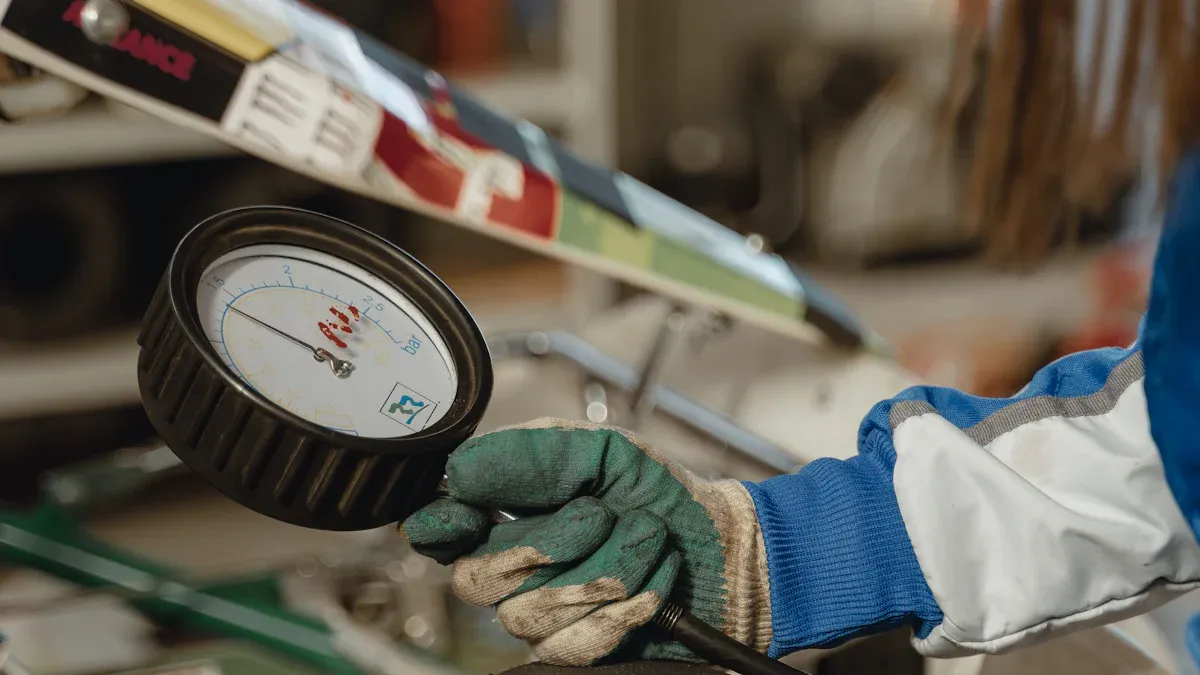
You should always care about pressure accuracy when you pick a tire inflator. If the gauge is wrong, you could put too much or too little air in the tires. This can cause big safety problems, especially in emergencies. Tires with low air wear out faster and use more fuel. Tires with too much air can burst, which is dangerous for drivers.
Here’s a quick look at how pressure accuracy affects your fleet:
Impact of Tire Pressure | Effect on Fleet Management |
|---|---|
Low Tire Pressure | Increased tire wear |
Higher fuel consumption | |
Compromised handling | |
Optimal Tire Pressure | Better fuel efficiency |
Longer tire life | |
Safer driving conditions |
A tire can fail if it has 20% less air. That is why you need digital pressure readouts and accurate psi readings. The best tire inflator always gives you the right numbers.
Safety features are very important. Look for auto-shutoff and auto-shutoff function. These stop the portable air compressor when the tire has enough air. You avoid putting in too much air and keep your tires safe. Some models have IoT features that send alerts if there is a problem. These safety features help you in emergencies and keep your business running.
You want every tire inflator to be strong, safe, and work well. Cheaper options may not have these safety features or may use weak parts. That can put your drivers at risk during an emergency. Always pick the best tire inflator with auto-shutoff, strong durability, and accurate psi. You get better results and feel safer.
Tip: Never skip safety checks. The right performance and safety features protect your team and your investment.
Balancing Factors for Maximum Value
Decision Frameworks and Scoring
You want to make smart choices when you buy tire inflators in bulk. It helps to use a simple framework to compare your options. You can score each tire inflator on three things: quality, price, and performance. This way, you see which one gives you the most value for your money.
Start by making a table. List each tire inflator model and give a score from 1 to 5 for each factor. Here’s an example:
Tyre Inflator Model | Quality (1-5) | Price (1-5) | Performance (1-5) | Total Score |
|---|---|---|---|---|
Model A | 4 | 3 | 5 | 12 |
Model B | 3 | 5 | 3 | 11 |
Model C | 5 | 2 | 4 | 11 |
You can change the scores to fit what matters most to you. If performance is your top goal, give it more weight. If you want the lowest price, focus on that. This scoring system helps you see the real value of each tire inflator. You do not have to guess. You can show your team why you picked a certain model.
Tip: Ask your team to help with scoring. People who use the tire inflator every day know what works best.
You can also use a checklist. Write down the features you need, like auto-shutoff, digital gauge, or high psi. Check off each feature for every tire inflator. The one with the most checks often gives you the best value.
Price vs. Performance Trade-Offs
You might think the cheapest tire inflator saves you money. That is not always true. Sometimes, a low price means you lose out on performance or quality. You want to find the right balance. Think about what happens if you buy a tire inflator that does not last long or does not work well. You may spend more money fixing or replacing it. You may also lose time and customers.
Let’s look at an example. You see two tire inflators. One costs $25 and the other costs $35. The cheaper one has a lower performance rating. It fills tires slowly and the gauge is not very accurate. The $35 model has better performance and lasts longer. If you buy the cheaper one, you may need to buy a new one sooner. You may also have problems with safety. The more expensive model gives you better value because it works better and lasts longer.
Here are some questions to help you decide:
Does the tire inflator meet your daily needs?
Will it keep working after many uses?
Does it have the safety features you want?
How much will you spend on repairs or replacements?
You can use a simple formula to check value:
Value = (Quality + Performance) / Price
A higher score means better value. You want a tire inflator that gives you strong performance and lasts a long time, without costing too much.
Note: Sometimes, paying a little more up front saves you money later. You get better performance and fewer problems.
You can also talk to your supplier. Ask if they offer a warranty or after-sales support. Good support adds value. If something goes wrong, you get help fast. That keeps your business running and your customers happy.
In the end, you want to feel good about your choice. Use these frameworks and examples to guide you. You will find the tire inflator that gives you the best value for your business.
Negotiation Tips and After-Sales Support
Negotiation Strategies for Bulk Orders
You can save money when you buy many tire inflators at once. Good negotiation helps you get more than just a lower price. Try to build a good relationship with your supplier. If they trust you, you might get better deals. You could get faster shipping or easier ways to pay. You can also ask to pay later or try new products first.
Here’s a table with smart ways to negotiate:
Strategy | What It Means | Example Benefit |
|---|---|---|
Priority Access to Resources | Get your orders before others if supplies run low | Faster delivery when it is busy |
Flexible Payment Terms | Take more time to pay for your order | Pay in 60 days instead of 30 |
Reduced Transaction Costs | Fix problems fast and without extra cost | Free parts if something breaks |
Access to Innovations | Use new technology before other buyers | Try smart inflators before others |
Improved Collaboration | Work together to make special inflators | Inflators made just for your business |
Risk Mitigation | Get help if things go wrong in the market | Prices stay steady even if costs rise |
Tip: Always get your deal in writing. This helps you if there is a problem later.
Ensuring Support and Warranty
After you buy, you want help if something breaks. Good after-sales support and a strong warranty are important. Some suppliers give long warranties and free repair shipping. Others only fix basic problems.
Here’s how some top suppliers compare:
Supplier | Warranty Duration | After-Sales Support |
|---|---|---|
INNOVV P1 Portable | 24 months | Free shipping anywhere for repairs |
SimpleTire | Varies | Fixes problems with parts and work |
Common problems covered by warranty are slow inflators, loud sounds, or gauges that are not correct. If the gauge is wrong, it can be unsafe. Most warranties last two years but do not cover normal use, mistakes, or not following the rules. You need your receipt to get help.
Note: Good support keeps your business working and your team safe. Always read the warranty before you buy.
You can get the best value when you buy tire inflator products in bulk if you follow a few smart steps. Start by scoring each option for quality, price, and performance. Use tools like scorecards, surveys, and product testing to check your suppliers:
Method | Description |
|---|---|
Scorecards | Rate suppliers with numbers to track how they do over time. |
Surveys | Ask your team how happy they are with the tire inflator and service. |
Product Testing | Test inflators to make sure they work as promised. |
Keep reviewing your buying plan. This helps you spot new tech, meet new rules, and keep your supply chain strong.
Check your needs often.
Watch for new features and safety rules.
Build good supplier relationships.
Stay flexible. Your business will change, and so will your tire inflator needs.
FAQ
How do I know if a tire inflator is good quality?
You can check for certifications like ISO 9001 or IATF 16949. Ask your supplier for proof. Read reviews from other buyers. Test a sample if you can. Good inflators feel sturdy and work smoothly.
What features should I look for in a bulk order?
Look for these features:
Accurate digital gauge
Auto-shutoff
High psi rating
Durable build
These features help you get safe and reliable inflators for your business.
Can I negotiate better prices for large orders?
Yes, you can! Suppliers often give discounts for big orders. Ask for bulk pricing, flexible payment terms, or free shipping. Building a good relationship with your supplier helps you get better deals.
What should I do if a tire inflator breaks after purchase?
Contact your supplier right away. Check your warranty details. Most suppliers offer repairs or replacements if the problem is covered. Keep your receipt and warranty card handy for faster service.
See Also
Essential Features B2B Buyers Need in Tire Inflators
Key Factors for Assessing Tire Inflator Manufacturers Effectively
Important Considerations for B2B Buyers of Tire Inflators
Selecting Ideal Tire Inflator Models for Your Amazon Business